Manage cookies that are used for advertising, such as ad personalization, remarketing, and ad effectiveness analysis.
2.19.3.3. telnet
telnet — utility for connecting to network devices via Telnet protocol.
Windows
Enable
Notes:
- The utility is present in Windows, but is disabled by default.
- Telnet can be enabled via the console:
- Windows Command Prompt (as administrator):
dism /online /Enable-Feature /FeatureName:TelnetClient - Windows PowerShell (as administrator):
Enable-WindowsOptionalFeature -Online -FeatureName TelnetClient
- Press Win+R (or right-click on "Start" and select "Run"), enter
appwiz.cpland press Enter: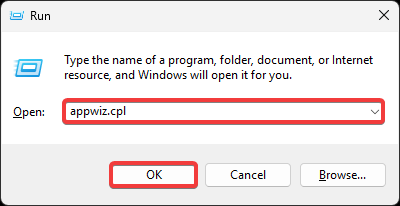
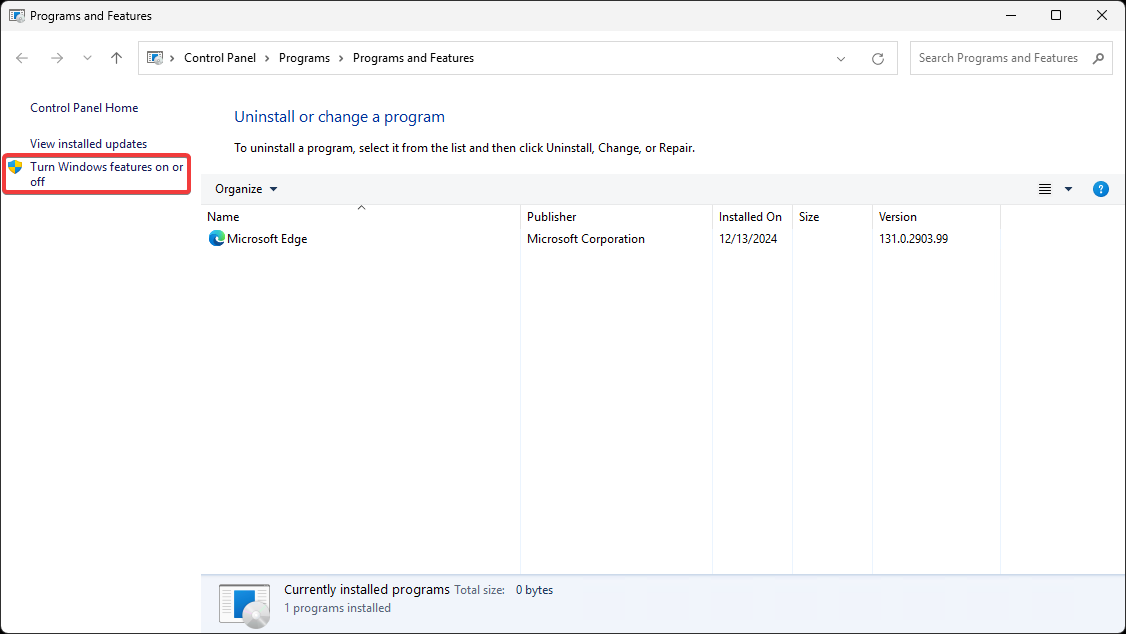
- Click "Turn Windows features on or off":
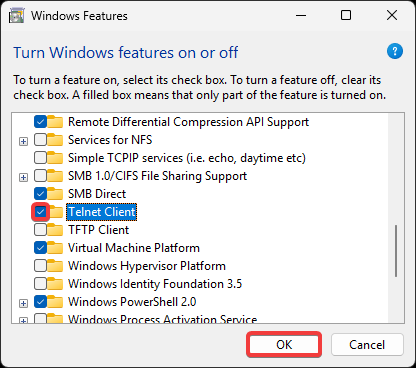
- Enable "Telnet Client" and click "OK":
Use
- Open command prompt.
- Execute the command (instead of
example.com, specify the address of the desired site withouthttp://orhttps://at the beginning and/at the end, instead of80— the desired port):telnet example.com 80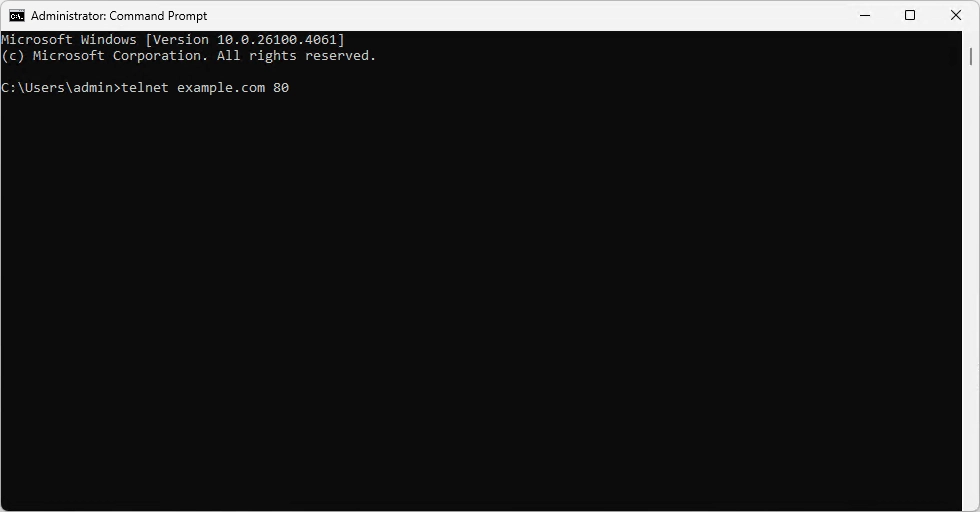
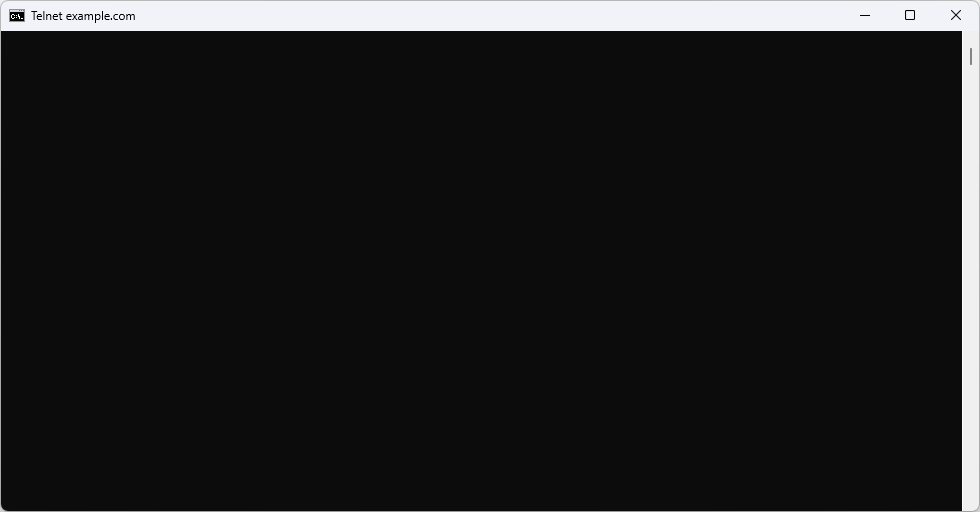
- Wait for the connection results — if successful, a blank screen should appear:
 If the connection fails, an error message will appear: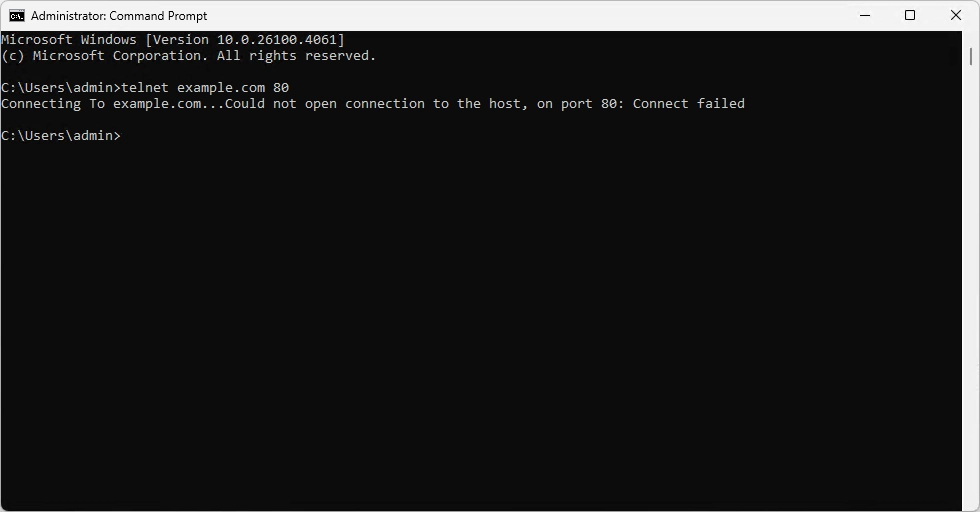
To exit telnet, press Ctrl+], type q and press Enter.
macOS
Install
- Open terminal.
- Install the Homebrew package manager (if not installed):
- Execute the command:
/bin/bash -c "$(curl -fsSL https://raw.githubusercontent.com/Homebrew/install/HEAD/install.sh)" - At the prompt "Press RETURN to continue or any other key to abort", press Enter.
- When prompted for a password, enter the password for your account on your device (no characters will appear on the screen when you enter a password) and press Enter.
- Wait for the installation to complete.
- Execute the command:
brew install telnet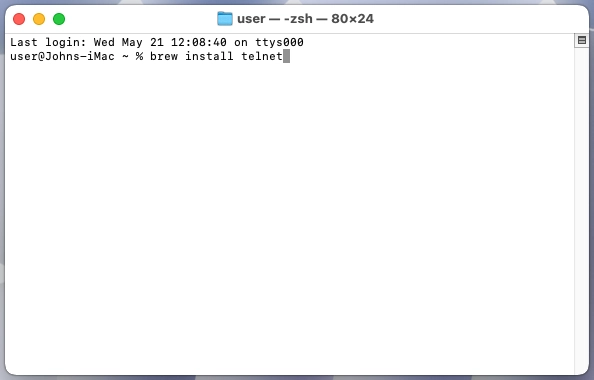
- Wait for the installation to complete.
Use
- Open terminal.
- Execute the command (instead of
example.com, specify the address of the desired site withouthttp://orhttps://at the beginning and/at the end, instead of80— the desired port):telnet example.com 80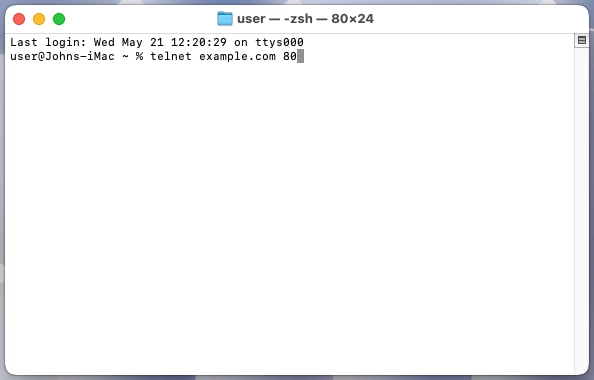
- Wait for the connection results — if successful, this message will appear:
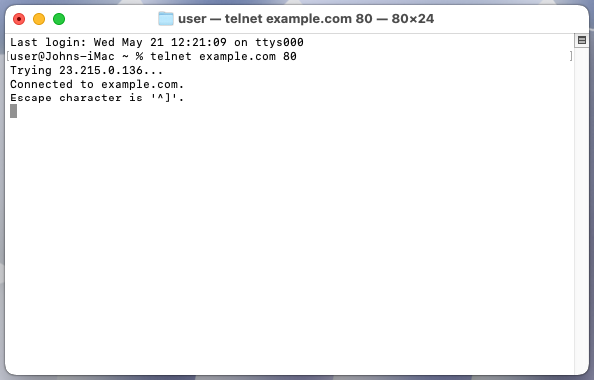 If the connection fails, an error message will appear: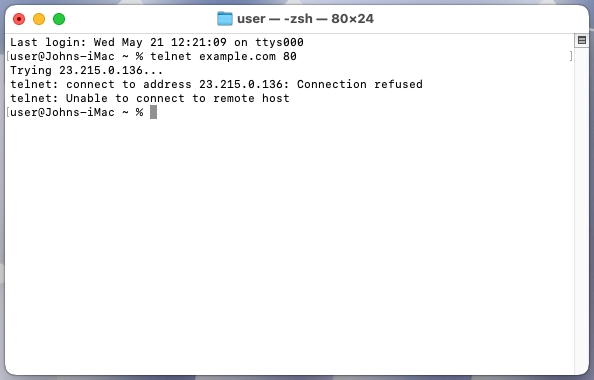
To exit telnet, press Ctrl+], type q and press Enter.