Manage cookies that are used for advertising, such as ad personalization, remarketing, and ad effectiveness analysis.
2.5.1.2. Connection sources
flowchart TB
fm@{ shape: rounded, label: "📂 File manager" }
subgraph Hosting accounts
account@{ shape: rounded, label: "☁️ Hosting account" }
backup@{ shape: rounded, label: "🔄 Backup" }
end
vps@{ shape: rounded, label: "💻 VPS" }
storage@{ shape: rounded, label: "📦 Storage" }
ftp@{ shape: rounded, label: "🔌 FTP" }
ssh@{ shape: rounded, label: "🔌 SSH" }
server@{ shape: rounded, label: "🖥 Third-party server" }
fm--->|SSH|account
fm--->|FTP|backup
fm--->|SSH|vps
fm--->|FTP|storage
fm-->ftp
fm-->ssh
ftp-->server
ssh-->server
Using the file manager, you can connect to your hosting account, its backup, VPS, storage or any server via FTP or SSH.
Current source
The current connection source is displayed at the top of the panel to the left of the path: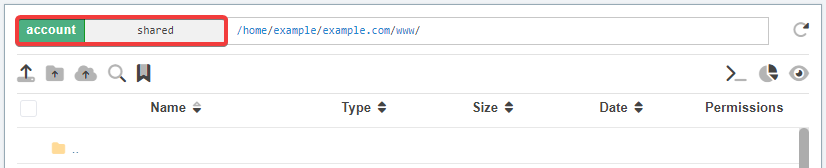
The connection source button shows the current source and allows you to change it:
- account — connection to hosting account (default source).
- The name of the hosting account is displayed on the right.
- By clicking on the name, you can quickly switch between hosting accounts available in your current account.
- backup — connection to backup of the hosting account.
- The date the backup was created is displayed on the right.
- By clicking on the date, you can quickly switch between backups for available dates.
- vps — connection to VPS.
- The name of the VPS is displayed on the right.
- By clicking on the name, you can quickly switch between the VPS available in your current account.
- storage — connection to storage.
- The name of the storage is displayed on the right.
- By clicking on the name, you can quickly switch between the storage available in your current account.
- ftp — connection to an FTP server.
- The FTP server address is displayed on the right.
- ssh — connect to a server via SSH.
- The user's login on the server is displayed on the right.
Changing source
By clicking on the current connection source, you can change it to another one:
Hosting account
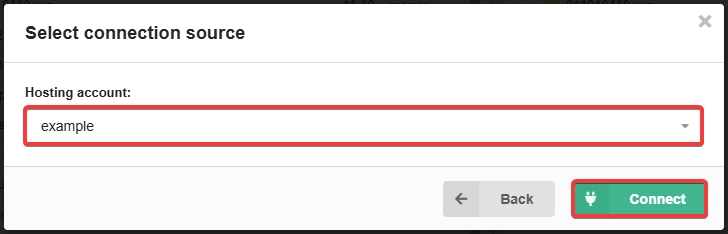
All hosting accounts that can be accessed from the current account are available for selection.
- Click on the current connection source and select "Hosting account".
- Select the desired hosting account from the list and click "🔌 Connect":
Backup
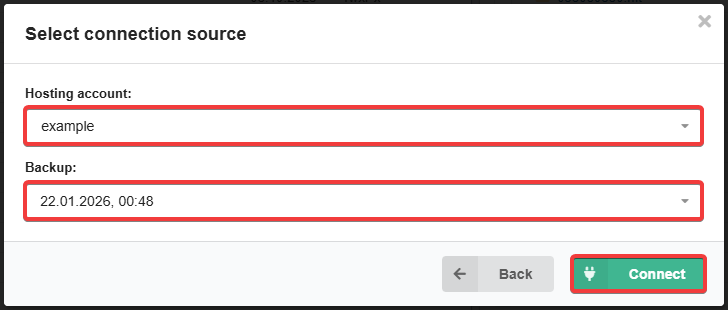
All hosting accounts accessible from the current account and all dates for which backups of the selected hosting account are available for selection.
- Click on the current connection source and select "Backup".
- Select the desired hosting account and date from the list and click "🔌 Connect":
VPS
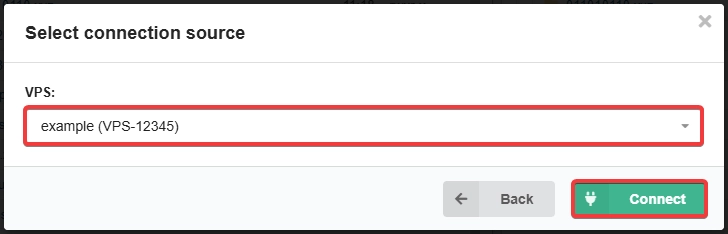
All VPS accessible from the current account are available for selection.
- Click on the current connection source and select "VPS".
- Select the desired server from the list and click "🔌 Connect":
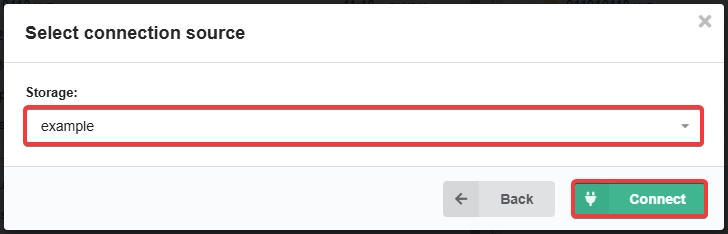
Storage
All storages accessible from the current account are available for selection.
- Click on the current connection source and select "Storage".
- Select the desired storage from the list and click "🔌 Connect":
FTP
- Click on the current connection source and select "FTP".
- Enter the details for connecting to the desired server via FTP and click "🔌 Connect":
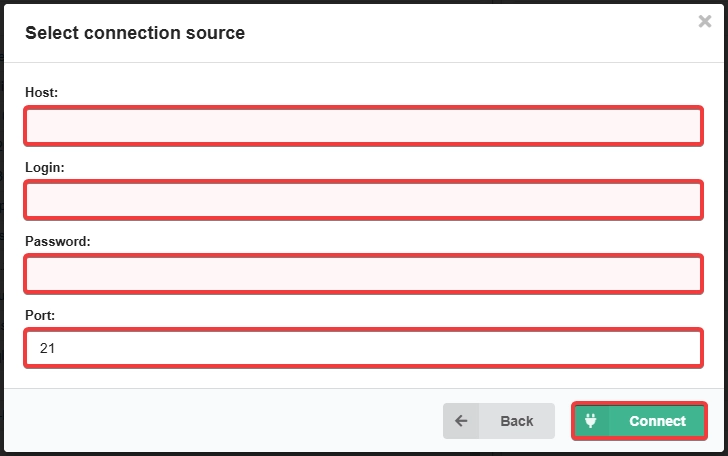
- Host — FTP server address.
- Login — user login on the FTP server.
- Password — user password on the FTP server.
- Port — port for connection (default is
21).
SSH
- Click the current connection source and select "SSH".
- Enter the details for connecting to the desired server via SSH and click "🔌 Connect":
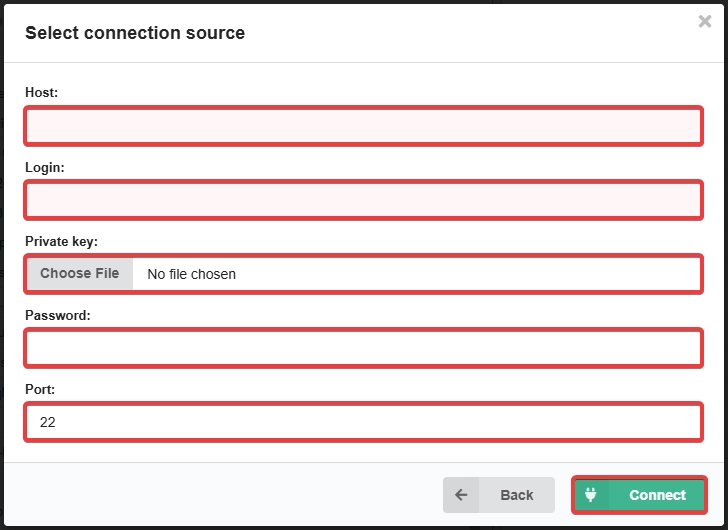
- Host — server address.
- Login — user login on the server.
- Private key — private key file.
- ⚠️ Only used if SSH key authentication is configured on the server.
- Password — user password on the server.
- You can leave this blank if you're using a key-based connection.
- Port — port for connection (default is
22).
(1)